
Flood Watch Explained: What It Means, What to Do and How Long It Lasts
Written By Dilshad AhmadPublished: 08 October 2026 • 10:59 PM IST
Flood Watch Explained: What It Means, What to Do and How Long It Lasts
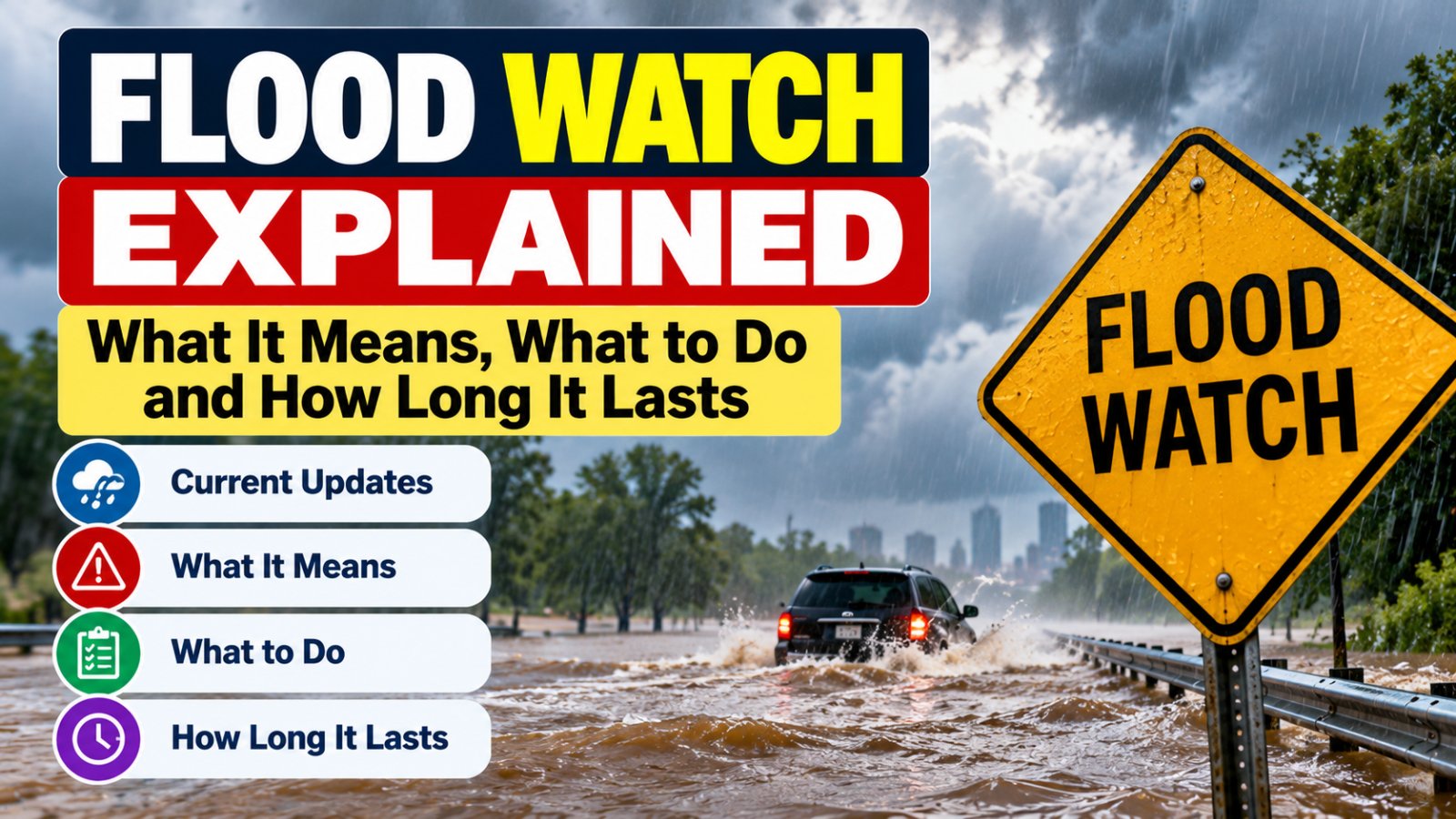
Flood Watch Update: Flood-related weather alerts are drawing attention across parts of the United States as heavy rain and storm systems create the potential for flooding in vulnerable areas. On October 8, 2026, the National Weather Service was highlighting active flood concerns in several locations, including parts of Hawaii and Florida. A Flood Watch does not mean flooding is already happening, but it means weather and ground conditions are favorable for flooding and residents should be prepared to act if conditions worsen.
Flood Watches are location-specific and can change quickly as rainfall, storm movement and river conditions change. Residents should check their local National Weather Service forecast office for the latest alert affecting their area.
The National Weather Service (NWS) classifies a Flood Watch as a preparedness alert issued when current or developing conditions are favorable for flooding. It does not mean that flooding is certain or already occurring. The purpose of the watch is to give people time to prepare before a potentially dangerous situation develops.
What Is a Flood Watch?
A Flood Watch means there is a possibility of flooding because weather or hydrological conditions are becoming favorable. Heavy rainfall, saturated ground, rising rivers, slow-moving storms or other conditions can lead to flooding.
According to the National Weather Service, a Flood Watch is generally issued several hours to days before possible flooding. In some river or stream situations, a watch may be issued several days ahead when forecast confidence is sufficient.
Why Is a Flood Watch Issued?
Weather officials may issue a Flood Watch when several factors indicate an increased risk of flooding. These can include:
- Heavy or prolonged rainfall is expected.
- Storms may repeatedly move over the same location.
- The ground is already saturated from previous rain.
- Rivers, creeks or streams are expected to rise.
- Urban areas may experience rapid water accumulation.
- Tropical systems or other major weather systems may produce excessive rainfall.
- Local drainage systems may be overwhelmed by intense rainfall.
What Should You Do During a Flood Watch?
A Flood Watch is the time to prepare rather than wait for flooding to begin. Residents in the affected area should monitor official weather information and be ready to move to a safer location if a warning is issued.
| Action | Why It Matters |
|---|---|
| Check local alerts | Weather conditions can change rapidly. |
| Know higher ground nearby | A safe location can become important if flooding develops. |
| Avoid unnecessary travel | Heavy rain can reduce visibility and make roads dangerous. |
| Secure important belongings | Move important documents and valuables away from areas vulnerable to water. |
| Keep emergency supplies ready | Power outages or road closures may make normal services difficult to access. |
Flood Watch vs. Flood Warning
Understanding the difference between a Flood Watch and a Flood Warning is important because the recommended response is different.
| Alert | What It Means | What You Should Do |
|---|---|---|
| Flood Watch | Flooding is possible because conditions are favorable. | Be prepared and monitor updates. |
| Flood Warning | Flooding is occurring, imminent or highly likely. | Take immediate action and follow local instructions. |
| Flash Flood Warning | A rapidly developing flash flood is occurring, imminent or highly likely. | Move immediately to higher ground when instructed or when flooding threatens. |
How Long Does a Flood Watch Last?
There is no single nationwide duration for a Flood Watch. The time period depends on the weather system, expected rainfall, river conditions and the forecast for the specific area.
A watch may remain active for several hours or longer and can be extended, shortened, upgraded or cancelled as new weather information becomes available.
This is why people should not rely on an old screenshot or social-media post. The latest alert from the National Weather Service or local emergency management officials should be used when making safety decisions.
Can a Flood Watch Become a Flood Warning?
Yes. A Flood Watch can be followed by a Flood Warning if flooding becomes imminent or is already occurring.
The transition depends on observed rainfall, river levels, radar information, forecasts and reports from the affected area. In rapidly developing situations, a Flash Flood Warning can also be issued when dangerous flooding may develop within a short period.
Never drive through a flooded road simply because the water does not appear deep. Floodwater can hide damaged roads, debris and other hazards. Follow local emergency instructions and use an alternate route when authorities advise avoiding flooded areas.
What Areas Are Most at Risk?
The exact areas affected by a Flood Watch depend on the weather system. Low-lying locations, areas near rivers and streams, urban locations with drainage limitations and places that have already received significant rainfall can face elevated flood risk.
Importantly, a Flood Watch does not mean every location inside the highlighted area will flood. Local conditions can vary considerably even within the same watch area.
How to Check the Latest Flood Watch for Your Area
- Check the National Weather Service website.
- Enter your city, state or ZIP Code.
- Review the current Watches, Warnings and Advisories.
- Read the alert details, including the affected area and expiration time.
- Continue checking for updates if heavy rain or storms are approaching.
Local emergency management agencies may also issue evacuation instructions or other safety information when flooding becomes a serious threat.
Frequently Asked Questions
Does a Flood Watch mean flooding is happening?
No. A Flood Watch means conditions are favorable for flooding. Flooding is possible but not necessarily occurring.
Is a Flood Watch dangerous?
The watch itself is not the dangerous event. It is an alert that conditions could produce flooding. People should use the watch period to prepare and monitor official updates.
What is more serious, a Flood Watch or Flood Warning?
A Flood Warning is more urgent. It means flooding is occurring, imminent or highly likely and people may need to take immediate action.
How long can a Flood Watch last?
The duration varies by location and weather conditions. A watch can be changed or cancelled as forecasts and observations change.
Can I drive during a Flood Watch?
A Flood Watch does not automatically mean every road is unsafe, but driving conditions can deteriorate quickly. Avoid unnecessary travel in areas experiencing heavy rain or flooding and follow local road and emergency instructions.
Where can I check an official Flood Watch?
The National Weather Service provides official weather alerts and flood-related information for locations across the United States. Local emergency management agencies can also provide location-specific instructions.
Bottom Line
A Flood Watch means flooding is possible because weather or hydrological conditions are favorable. It is a preparedness alert, not confirmation that flooding is already occurring.
For people living or traveling in an affected area, the most important step is to stay informed, understand the difference between a Flood Watch and Flood Warning, avoid unnecessary exposure to flood-prone areas and be ready to act if the alert level increases.
Because flood conditions can change quickly, always rely on the latest information from the National Weather Service and local emergency management officials rather than outdated posts or unofficial social-media updates.
National Weather Service — Flood Related Products and Flood Safety information.