
SNAP Benefits 2026: Who Qualifies and How to Apply
Written By Dilshad AhmadPublished: 25 October 2026 • 11:47 PM IST
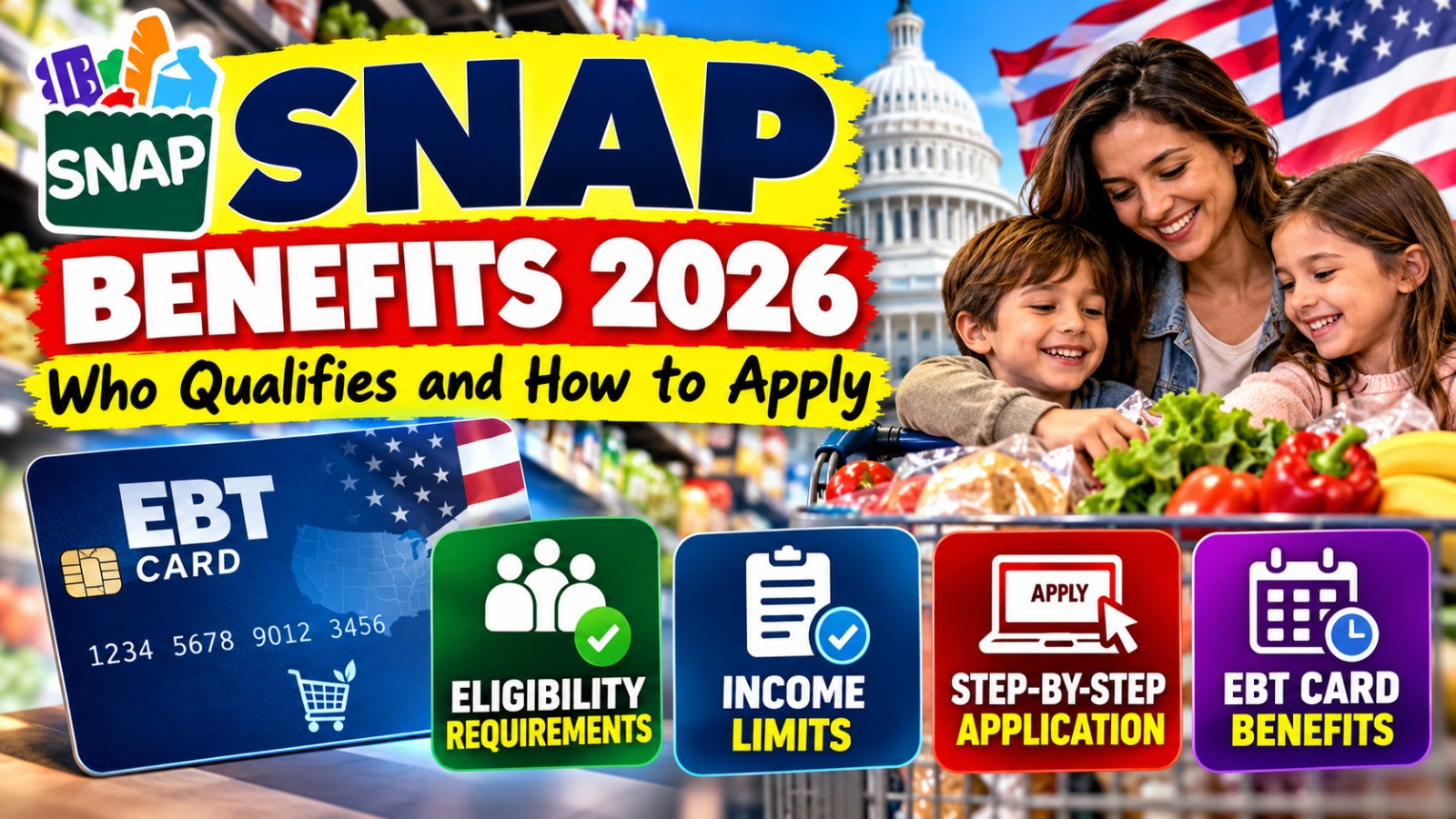
SNAP Benefits 2026: Who Qualifies and How to Apply
A simple guide to food assistance, eligibility rules, applications, and EBT cards.
Know the rules before you apply
If grocery bills are taking up more of your budget than usual, you may have come across something called SNAP. It is one of the main government food assistance programs in the United States, and it is designed to help eligible households afford groceries.
But who can actually get SNAP benefits in 2026? Does having a job automatically disqualify you? Where do you apply, and how do you know whether your application has been approved?
Let's go through the basics in plain English. The most important thing to remember is that SNAP eligibility depends on your circumstances and the rules used by your state. This guide explains how the process generally works and where to check the official requirements that apply to you.
SNAP, formerly known as food stamps, helps eligible low-income households pay for groceries. You apply through your state or local SNAP agency. If approved, benefits are generally added to an Electronic Benefits Transfer (EBT) card.
What Are SNAP Benefits?
SNAP stands for the Supplemental Nutrition Assistance Program. It is a federal nutrition assistance program administered by the U.S. Department of Agriculture, with state agencies handling applications and day-to-day case decisions.
You may still hear people call it the food stamp program. The name has changed, but the purpose is familiar: helping eligible households buy food when their budgets are tight.
Helps pay for eligible food items at participating retailers.
Approved benefits are generally delivered electronically.
Eligibility considers household details and financial circumstances.
SNAP is not a general-purpose cash payment. Benefits are intended for eligible food purchases, and certain items and transactions are not allowed. If you receive benefits, check your state's official guidance to understand exactly how your EBT card can be used.
Who May Qualify for SNAP in 2026?
There is no single answer that works for everyone. Two households with similar incomes may receive different decisions because their household sizes, expenses, state rules, or other circumstances are different.
Here are some of the main things the SNAP agency may review when you apply.
| Factor | What it means |
|---|---|
| Household income | The agency reviews income under the rules applicable to your household and state. |
| Household size | The number of people in your SNAP household can affect income standards and benefit calculations. |
| Expenses and deductions | Certain allowable expenses may affect how countable income is calculated. |
| State requirements | States may apply different options and procedures within federal SNAP rules. |
| Citizenship or immigration status | Specific eligibility rules apply. Do not assume everyone in a household has the same eligibility status. |
| Work rules | Some applicants and recipients must meet work-related requirements, depending on their circumstances and applicable rules. |
Having a job does not automatically mean you cannot receive SNAP. Some working households qualify because their income is still limited compared with their household needs. On the other hand, having a low income alone does not guarantee approval.
The agency reviews the details of your case before making a decision. For that reason, it is better to apply or check with your local agency than to rule yourself out based on a general online statement.
SNAP Income Limits for 2026
Income is one of the first things people want to know about SNAP, and for good reason. However, the income limit is not always one simple number.
SNAP has federal eligibility standards, while state options can affect how those standards are applied. The relevant limits also depend on household size and the applicable benefit year. Some households may qualify for deductions that change their countable income.
Make sure the figures match the correct benefit year and your state. Do not rely on an old chart or a social media post that promises everyone under a certain income will automatically qualify.
What income information should you check?
- Your household's gross income, before certain deductions.
- Your household's net or countable income, as determined under SNAP rules.
- The number of people included in your SNAP household.
- Whether allowable deductions or special rules apply to your circumstances.
- Any additional state-specific eligibility standards that apply.
SNAP rules can change, and recent federal legislation has included changes affecting program eligibility and administration. That makes it especially important to check current official guidance rather than assume last year's rules still apply.
For current program information, start with the USDA SNAP eligibility page and your state's SNAP agency. If you are unsure how your income should be counted, ask the agency handling your application.
How Much SNAP Benefits Can You Get?
The amount a household receives depends on several factors, including household size, income after applicable deductions, and the program rules used by the state. Not everyone who qualifies receives the same amount.
For example, a household with more eligible members may have a different maximum benefit than a one-person household. But the actual amount is not determined by household size alone; the agency also considers the financial details of the case.
| What affects the amount? | Why it matters |
|---|---|
| Household size | The household's applicable maximum benefit can vary by size. |
| Countable income | Income remaining after applicable deductions can affect the final calculation. |
| Allowable deductions | Eligible expenses may change the amount of income counted under program rules. |
| Current benefit-year rules | Maximum amounts and standards may be updated periodically. |
Be careful with websites claiming that every applicant will receive a fixed amount, such as $500 or $1,000. There is no universal payment amount for every SNAP household. Use the current official rules for your state to understand what you may qualify for.
How to Apply for SNAP Benefits
Once you have checked the basic eligibility rules, the next step is to contact the SNAP agency for your state. The process is not identical everywhere, but the general steps are similar.
Start with the USDA's official state directory or USAGov. Use the correct state or local agency rather than an unfamiliar website that charges an application fee.
Find your state's SNAP office →Depending on your state, you may be able to apply online, in person, by mail, or by fax. Follow the instructions provided by your agency.
The agency may ask for details about household members, income, housing costs, and other information needed to determine eligibility.
Some applicants must take part in an interview. Check your messages and respond to requests from the agency so your application can move forward.
The agency will review your application and tell you whether you are approved, denied, or need to provide more information. If approved, follow the instructions for receiving and using your EBT card.
Submitting an application does not guarantee approval. It is important to give accurate information and respond to requests from the agency handling your case.
Documents and Information You May Need
Getting your paperwork together before you apply can make the process easier. The exact documents depend on your situation and your state's procedures, so treat this as a preparation checklist rather than a list of documents everyone must submit.
- Identification and contact information, as requested.
- Information about people in your household.
- Recent pay stubs or other income records, if applicable.
- Information about rent, mortgage, utilities, or other relevant expenses.
- Any additional documents the state agency asks you to provide.
- Information needed to verify eligibility under applicable citizenship or immigration rules, where relevant.
Do not send sensitive personal documents to an unofficial website just because it promises faster approval. Confirm that you are dealing with your state's legitimate government agency before sharing personal or financial information.
How Long Does SNAP Approval Take?
Processing time depends on the application and the circumstances of the household. Under general SNAP rules, eligible applications are normally processed within 30 days. Some households may qualify for expedited service and receive a decision or benefits much sooner.
If you are facing an immediate food emergency, tell your SNAP agency when you apply. Ask whether your situation may qualify for expedited SNAP service and what information the agency needs to assess it.
Do not assume that every application will be approved within a few days. Check your state's official application instructions and respond promptly if the agency asks for additional information.
What Is an EBT Card?
EBT stands for Electronic Benefits Transfer. If your SNAP application is approved, benefits are generally loaded onto an EBT card that works in a similar way to a payment card at participating stores.
You use the card and its PIN to pay for eligible purchases. Your monthly benefit amount and deposit date depend on your case and the rules used by your state.
How to check your EBT balance
- Check the receipt from your most recent eligible purchase; some stores show your remaining balance.
- Check whether your state offers an official EBT or benefits app.
- Use the official contact details for your state's EBT service or SNAP agency.
- Keep your PIN private and report a lost card or suspicious activity through the official service.
There is no single national payment date for every SNAP recipient. States use their own benefit issuance schedules, so a payment date you see online for another state may not apply to you.
For official guidance on applying and checking your balance, visit USAGov's food stamp and SNAP page.
What Can You Buy With SNAP Benefits?
SNAP benefits are meant to help with eligible food purchases. They cannot be used like unrestricted cash for every item in a grocery store.
| Generally eligible food | Generally not eligible |
|---|---|
| Fruits and vegetables | Alcoholic beverages |
| Bread, cereal, rice, and pasta | Tobacco products |
| Meat, fish, poultry, and eggs | Vitamins and dietary supplements |
| Milk and many other grocery foods | Nonfood household supplies |
These are general examples, not a complete list. Rules can be specific to the product and how it is sold. Restaurant purchases are generally not allowed unless a particular exception or approved program applies.
For the official rules, see the USDA's SNAP-eligible food items guidance.
What If You Are Denied SNAP Benefits?
A denial does not always mean you will never qualify. The agency may have determined that you did not meet the rules based on the information available at the time, or there may be details you need to clarify.
If your application is denied, read the notice carefully. It should explain the decision and provide information about your rights and any review or appeal options that apply.
- Check the reason for the denial.
- Review whether the income, household, or expense information is correct.
- Contact your SNAP agency if something appears incorrect or you need an explanation.
- Follow the notice's instructions and deadlines if you want to request a fair hearing or appeal.
If your circumstances change later, ask your state agency whether you can submit a new application. Do not miss an appeal deadline while waiting for an informal answer.
Beware of SNAP and EBT Scams
Because SNAP involves financial assistance, scammers sometimes use fake texts, websites, and social media posts to target applicants and cardholders. Be especially careful with messages promising guaranteed benefits or claiming you can get an instant payment by paying a fee.
- Do not share your EBT PIN or account details with strangers.
- Use your state's official website or a verified government office to apply.
- Be skeptical of messages promising guaranteed approval or a special payment for everyone.
- Never assume a website is official simply because it uses a government-looking logo.
You can start from USAGov's official SNAP page to find legitimate application information and your state's office.
Frequently Asked Questions About SNAP Benefits
1. What does SNAP stand for?
SNAP stands for the Supplemental Nutrition Assistance Program. It helps eligible households with the cost of food in the United States.
2. Can I get SNAP if I have a job?
Possibly. Working people may qualify if their household meets the applicable eligibility rules. Income, household size, deductions, and state rules can all matter.
3. Is there one SNAP income limit for the entire country?
Not one simple limit that applies in the same way to every household. The applicable standards depend on household size, benefit-year rules, state options, and individual circumstances.
4. How do I apply for SNAP benefits online?
Start with the official SNAP agency for your state. Many states offer online applications, while others also accept applications in person, by mail, or by fax.
5. How long does SNAP approval take?
Under general program rules, applications are normally processed within 30 days. Some households may qualify for expedited service. Your state agency can explain the process for your case.
6. How will I receive SNAP benefits?
If approved, you will generally receive benefits electronically through an EBT card. Follow your state's instructions to activate and use the card.
7. Can college students receive SNAP?
Some students may qualify, but special eligibility rules can apply to students enrolled in higher education. Check the current federal rules and your state agency's guidance.
8. Can non-U.S. citizens qualify for SNAP?
Some noncitizens may qualify under specific eligibility rules, while others may not. Eligibility depends on immigration status and the rules currently in effect. Check with the official agency for accurate guidance.
9. Can I use SNAP to buy household products?
Generally, no. SNAP benefits are intended for eligible food purchases, not ordinary nonfood items such as cleaning supplies or toiletries.
10. Where can I check my state's SNAP payment schedule?
Contact your state SNAP agency or use its official website. Deposit dates differ across states and may depend on your case details.
11. What should I do if my EBT card is lost?
Contact your state's official EBT service or SNAP agency as soon as possible and follow its instructions for reporting the card and requesting a replacement.
12. Is SNAP the same as a government stimulus check?
No. SNAP is a food assistance program with eligibility rules and restrictions on how benefits can be used. It is not a general stimulus payment for everyone.
Official SNAP Resources
If you are ready to check eligibility or start an application, these official resources are the best places to begin.
Final Thoughts
SNAP can make a real difference for households that are struggling to cover grocery costs. But before applying, it helps to understand how household size, income, deductions, and state-specific rules fit together.
If you think you may qualify, the simplest next step is to visit your state's official SNAP website and review its current instructions. You do not need to guess your eligibility from a headline or rely on an unofficial payment chart.
Keep your documents ready, provide accurate information, and follow up if the agency asks you for anything else. Those practical steps can help you navigate the application process with more confidence.
This article is for general informational purposes only. It is not legal, financial, or government-agency advice, and it does not guarantee eligibility or approval. SNAP requirements and procedures may change. Always confirm current rules, income standards, deadlines, and application steps with the USDA and your state's official SNAP agency.
Last reviewed for general guidance: October 2026. Check official sources for the latest requirements before applying.