

How to Make a Budget: A Step-by-Step Guide to Managing Your Money
Written By Dilshad AhmadPublished: 11 October 2026 • 03:30 PM IST
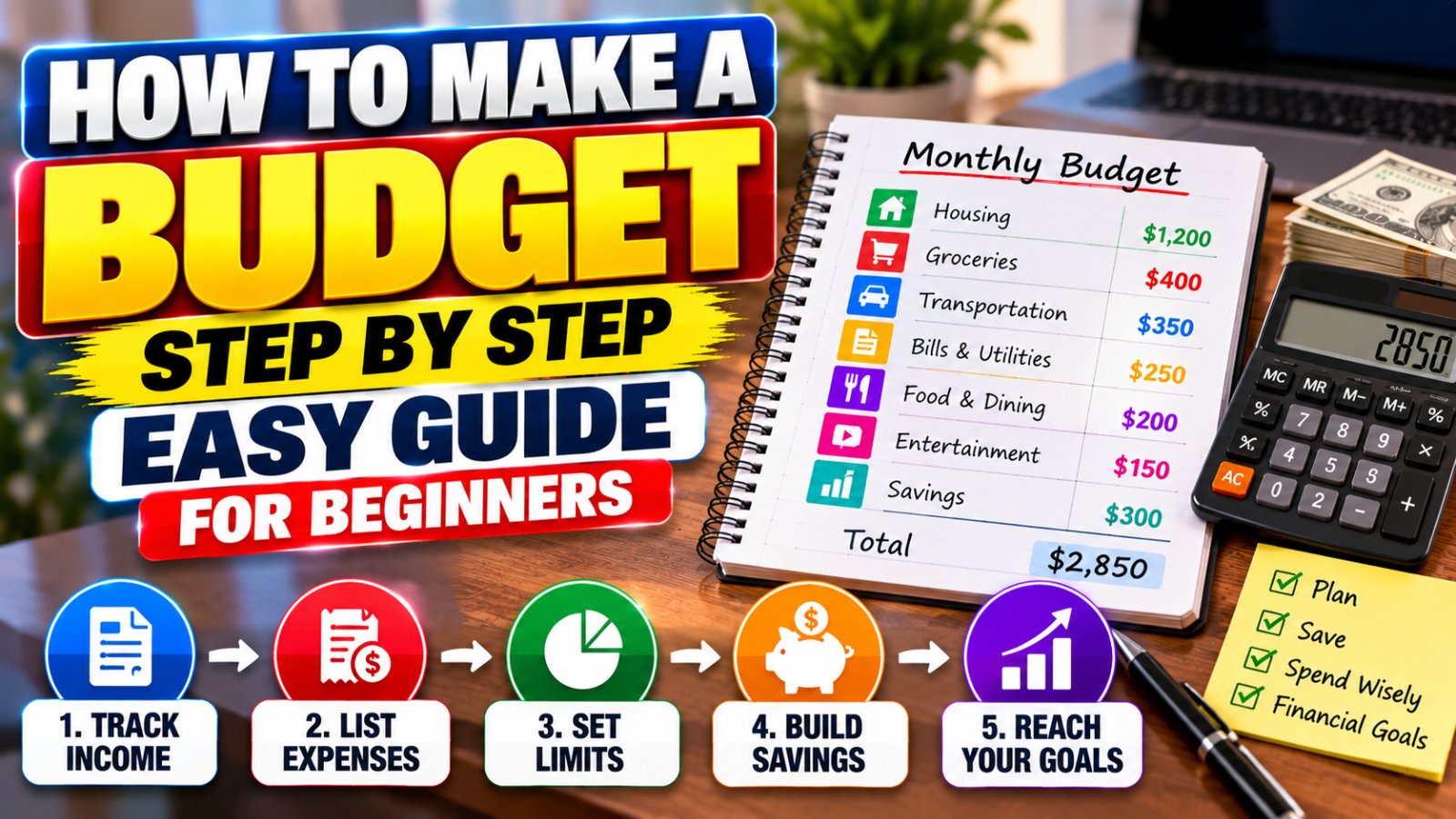
Learning how to make a budget is one of the simplest ways to take control of your money. Whether you receive a regular paycheck, work freelance, manage a household, or live on a fixed income, a monthly budget can help you understand where your money goes, prepare for upcoming bills, and make progress toward your financial goals.
A budget is not simply a plan to stop spending money. It is a practical way to decide how much you can afford to spend on housing, groceries, transportation, entertainment, savings, and other priorities. Instead of wondering where your paycheck went at the end of the month, you can give every dollar a purpose before spending it.
For U.S. households, budgeting also means accounting for expenses that may not arrive every month, including car insurance, annual subscriptions, medical bills, property taxes, and vehicle maintenance. Planning for these costs can make your monthly finances more predictable.
Quick Answer: How to Make a Budget
- Calculate your monthly take-home income.
- List all your regular bills and everyday expenses.
- Review your bank and credit card transactions to understand your spending.
- Set realistic limits for essential expenses and discretionary purchases.
- Include savings, emergency funds, and debt payments in your plan.
- Subtract your planned expenses from your income.
- Track your actual spending and review your budget every month.
Important: Build your budget around the money you actually receive after taxes and payroll deductions, rather than your gross salary.
What Is a Budget?
A budget is a written plan for how you will use your money over a specific period, usually one month. It compares your expected income with your planned expenses so you can decide how much to spend, save, and use to repay debt.
A personal budget typically includes three major components:
- Income: Money you receive from your job, self-employment, benefits, or other sources.
- Expenses: Money you spend on housing, food, transportation, bills, healthcare, entertainment, and other needs.
- Financial goals: Money you plan to save, use for emergencies, or put toward debt repayment and future purchases.
The purpose is to make sure your planned spending fits within your available income. If your expenses consistently exceed your income, you can use the budget to identify possible adjustments before the shortfall becomes a larger financial problem.
Step 1: Calculate Your Monthly Take-Home Income
The first step in creating a budget is determining how much money you can actually use. For most employees, this means the amount deposited into their bank account after taxes, insurance premiums, retirement contributions, and other payroll deductions.
Include All Reliable Income Sources
Depending on your circumstances, your monthly income may include:
- Salary or hourly wages after payroll deductions.
- Freelance or self-employment income after accounting for business expenses and setting aside money for taxes.
- Regular income from a second job or part-time work.
- Social Security or other benefits you receive.
- Child support or other recurring payments.
- Reliable rental or other recurring income.
Use realistic figures rather than assuming you will receive overtime, bonuses, or occasional side income. If your income changes from month to month, review several months of records and create a conservative estimate based on what you can reasonably expect to receive.
If you are paid every two weeks, remember that a typical year has 26 biweekly paychecks. Your average monthly income can be estimated by multiplying your usual paycheck by 26 and dividing by 12. However, for cash-flow planning, it may be easier to budget using the two paychecks you normally receive in most months and assign any third paycheck in a three-paycheck month a separate purpose.
Example: If your take-home pay is $2,000 every two weeks, your average monthly take-home income is approximately $4,333. This is an illustration, not a recommended income level or a guarantee of what you will receive.
Step 2: List All Your Monthly Expenses
Next, identify where your money goes. Start by reviewing bank statements, credit card transactions, receipts, bills, and payment histories. Looking at actual transactions is usually more reliable than trying to remember what you spent.
Divide your expenses into categories so you can see which costs are essential, which change from month to month, and which may be reduced.
Fixed Expenses
Fixed expenses are costs that usually remain the same or are predictable each month.
- Rent or mortgage payments.
- Car loan payments.
- Student loan payments.
- Insurance premiums.
- Internet and phone plans.
- Recurring subscriptions and memberships.
Variable Expenses
Variable expenses change depending on your usage, needs, or spending habits.
- Groceries and household supplies.
- Electricity, gas, water, and other utilities.
- Fuel, public transportation, and parking.
- Restaurants, coffee, and takeout.
- Clothing and personal care.
- Entertainment and recreational activities.
Irregular and Unexpected Expenses
Some costs occur only a few times a year or arrive without much warning. These can be particularly difficult to manage if you do not plan for them.
- Annual insurance premiums or registration fees.
- Vehicle repairs and maintenance.
- Medical expenses and prescription costs.
- Home repairs and appliance replacement.
- Holiday gifts, travel, and special occasions.
- Annual membership renewals and school-related expenses.
For predictable annual expenses, estimate the total amount and divide it by 12. For example, if you expect to spend $600 on a yearly expense, setting aside $50 each month can help you prepare for the bill.
Unexpected expenses are different because their timing and amount may be uncertain. Include a realistic amount for these costs when possible and work toward building an emergency fund over time.
Step 3: Choose a Budgeting Method
There is no single budgeting method that works for everyone. The best approach is one you can understand, maintain, and adjust when your financial circumstances change.
Method 1: The 50/30/20 Budget Rule
The 50/30/20 rule is a popular starting point for organizing take-home income. It divides your money into three broad categories:
| Category | Suggested Share | Examples |
|---|---|---|
| Needs | 50% | Housing, basic groceries, utilities, essential transportation, and minimum required debt payments. |
| Wants | 30% | Dining out, entertainment, hobbies, and optional purchases. |
| Savings and debt goals | 20% | Emergency savings, retirement contributions, and additional debt repayment. |
These percentages are guidelines, not strict rules. Your housing costs, family responsibilities, income, debt, and financial goals may require a different balance. If essential expenses already use more than half your income, forcing your budget into the 50/30/20 structure may be unrealistic.
In that situation, start with your actual expenses, protect essential needs, and identify gradual changes that are achievable. You can revisit the percentages as your circumstances improve.
Method 2: Zero-Based Budgeting
With zero-based budgeting, you assign a purpose to every dollar of your monthly take-home income. Your income minus your planned expenses, savings, and debt payments should equal zero.
This does not mean spending all your money. Savings contributions and extra debt payments are included in the plan, so money is assigned to those goals instead of remaining unplanned.
This method can work well if you want detailed control over your spending and are comfortable updating your budget regularly.
Method 3: Pay Yourself First
The pay-yourself-first approach prioritizes a savings goal before discretionary spending. Once you receive your income, you move a realistic amount toward savings or another important financial goal, then plan the remaining money around your bills and daily expenses.
This method may be useful if you struggle to save whatever happens to remain at the end of the month. However, make sure essential bills and required payments can still be covered before setting up automatic transfers.
Step 4: Create a Realistic Monthly Budget
After calculating your income and listing your expenses, put everything into a monthly plan. Start with essential costs, then include debt payments, savings goals, discretionary spending, and irregular expenses.
The following example shows how someone with $4,000 in monthly take-home income might organize a budget. The amounts are illustrative only; they are not estimates of average U.S. living costs.
| Budget Category | Planned Monthly Amount |
|---|---|
| Rent or housing | $1,200 |
| Utilities, internet, and phone | $250 |
| Groceries and household supplies | $400 |
| Transportation | $350 |
| Insurance and healthcare | $250 |
| Debt payments | $300 |
| Dining and entertainment | $200 |
| Personal and household spending | $150 |
| Emergency savings | $300 |
| Retirement or other savings goals | $300 |
| Irregular expense fund | $150 |
| Total Planned Outflow | $3,850 |
| Unallocated Money Remaining | $150 |
In this example, the person has $150 remaining after the listed expenses and savings contributions. They could assign that money to an additional financial goal, keep it available for cash-flow flexibility, or use it to cover a category that was underestimated.
The sample also illustrates an important budgeting principle: savings should be included in the plan instead of relying entirely on whatever is left over. If your actual costs are different, change the amounts to reflect your own circumstances.
Step 5: Plan Your Bills Around Your Paydays
A budget can look balanced on paper and still be difficult to follow if your bills are due before your next paycheck arrives. Cash-flow planning helps you understand not just how much money you have each month, but when that money becomes available.
Start by writing down each bill's due date and the paycheck or income deposit you expect to use to cover it.
Create a Bill Calendar
- Record the due date for rent or mortgage payments.
- List utility, phone, internet, insurance, and loan payment dates.
- Mark your expected paydays and recurring income deposits.
- Identify weeks when several bills are due at the same time.
- Plan ahead for expenses that occur quarterly or annually.
If your income arrives twice a month, you might use the first paycheck to cover some bills and the second paycheck for the remaining expenses. The exact arrangement depends on your due dates and available cash.
Where possible, maintain a checking-account buffer to help absorb small timing differences. Do not schedule automatic payments without checking that the required money will be available when the payments are processed.
If a bill is becoming difficult to pay, contact the provider or lender before the due date to ask about available payment arrangements. Do not assume that a payment date can be changed or that a late fee will automatically be waived.
Step 6: Set a Realistic Savings Goal
Saving money becomes easier when you have a specific purpose. Rather than simply writing "save more" in your budget, decide what you want the money to accomplish and how much you can reasonably set aside.
Your savings goals might include:
- Building an emergency fund.
- Saving for a car repair or replacement vehicle.
- Preparing for a move or housing deposit.
- Paying for a planned vacation.
- Preparing for medical expenses or other expected costs.
- Saving for retirement or another long-term financial goal.
Start With an Affordable Amount
If you have little or no savings, you do not need to begin with a large target. Choose an amount that fits your budget and work toward increasing it as your circumstances allow.
For example, saving $25 every week would add up to $1,300 over 52 weeks, before interest. That calculation assumes you make every planned contribution and do not withdraw the money.
Your first goal may be a small cash reserve that helps cover an urgent bill without relying on a credit card. Over time, you can work toward a larger emergency fund based on your essential expenses, job stability, household responsibilities, and other financial circumstances.
Keep money intended for emergencies reasonably accessible. For longer-term goals, consider the time frame and the risks associated with the type of account or investment you choose.
Step 7: Find Expenses You Can Reduce
Once your budget is written down, review each category and identify expenses you could reduce without making essential needs harder to meet.
You do not have to eliminate everything you enjoy. The aim is to spend intentionally and make room for the financial priorities that matter most to you.
Review Recurring Payments
Check your bank and credit card statements for subscriptions, memberships, and services you no longer use. Cancel unnecessary services and compare plans when a lower-cost option would meet your needs.
Plan Grocery Shopping
Make a shopping list before visiting the store, plan meals around food you already have, and compare unit prices. These steps can help reduce impulse purchases and food waste.
Set Limits for Optional Spending
Give yourself a monthly or weekly limit for dining out, entertainment, shopping, and other discretionary expenses. Track these purchases as you make them rather than waiting until the end of the month.
Review Major Recurring Costs
Housing, transportation, insurance, and debt payments can account for a substantial portion of a household budget. When it is practical, compare available options and review whether your current arrangements still fit your needs. Consider any fees, contract terms, coverage differences, or switching costs before making a change.
Practical tip: Start with one or two changes that are easy to maintain. A realistic budget you follow consistently is generally more useful than an overly restrictive plan you abandon after a week.
Step 8: Track Your Spending Throughout the Month
Creating a budget is only the beginning. To make it useful, compare your planned expenses with what you actually spend.
You can track spending with a spreadsheet, a notebook, a budgeting application, or a simple document. The method matters less than recording your purchases consistently.
Use a Simple Spending Tracker
| Date | Expense | Category | Amount |
|---|---|---|---|
| Oct. 3 | Grocery store | Food | $64.50 |
| Oct. 5 | Gas | Transportation | $38.00 |
| Oct. 7 | Lunch | Dining out | $15.00 |
The entries above are examples. Your own tracker should reflect your actual purchases and payments.
Review Your Budget Weekly
Set aside a few minutes each week to review your balances and spending. Ask yourself:
- Am I staying within my planned limits?
- Are any bills coming due before my next paycheck?
- Have I forgotten an expense or upcoming payment?
- Do I need to move money between categories?
- Am I still able to meet my essential expenses and savings goals?
If one category exceeds its limit, review the reason. You may be able to reduce spending elsewhere, use money reserved for that purpose, or revise an unrealistic estimate. Avoid counting the same dollars toward multiple goals.
Step 9: What to Do If Your Expenses Are Higher Than Your Income
If your planned expenses are greater than your take-home income, your budget has a shortfall. This does not mean budgeting has failed. It means you have identified a problem that needs attention.
Start by checking the numbers for missing income, duplicate expenses, and unrealistic estimates. Then separate essential expenses from optional spending and consider which changes are practical.
Prioritize Essential Expenses
Focus first on the expenses necessary to protect your household's basic needs, including housing, food, utilities, essential transportation, healthcare, and required payments. If you cannot cover everything, consider the consequences of missing each payment rather than paying bills based only on which creditor contacts you most frequently.
Look for Practical Adjustments
- Reduce discretionary spending where possible.
- Review recurring services and optional purchases.
- Contact service providers or lenders to discuss possible payment arrangements.
- Explore reliable ways to increase income if practical.
- Review whether irregular expenses can be planned for more effectively.
If debt payments or essential bills have become unmanageable, a reputable nonprofit credit counselor may be able to help you review your options. Check the provider's credentials, services, and fees before agreeing to any arrangement.
A budget cannot make insufficient income cover every expense automatically, but it can help you see the size of the shortfall and make more informed decisions about your next steps.
Step 10: Review and Update Your Budget Every Month
Your first budget will probably need adjustments. Actual expenses may differ from your estimates, utility bills may change, or an unexpected cost may affect your plans.
At the end of each month, compare your planned budget with your actual income and spending. Identify which categories were accurate, which were underestimated, and which changes would make the next month's plan more realistic.
Update your budget when you experience a major change, such as a new job, a change in income, a move, a new loan payment, or a change in household responsibilities.
For expenses that fluctuate seasonally, use past bills or account records where available. This can help you avoid relying on one unusually inexpensive month as the basis for your entire annual plan.
Free Budgeting Tools and Worksheets
You do not need to purchase a budgeting application to get started. Free worksheets and simple spreadsheets can help you organize your finances and identify areas where your plan needs improvement.
1. Consumer.gov Budget Guide
Consumer.gov explains how to list income, record expenses, subtract spending from income, and review your budget over time.
2. Free Budget Worksheet
The U.S. government's Consumer.gov worksheet provides a structured way to list monthly income and expenses, including housing, food, transportation, and other costs.
3. Consumer Financial Protection Bureau Resources
The Consumer Financial Protection Bureau provides educational resources and worksheets for tracking spending, planning bills, and working toward financial goals.
When choosing a budgeting app or online tool, review its privacy policy, data-sharing practices, fees, and account permissions. You can start with a simple spreadsheet if you prefer not to connect your bank accounts to another service.
Frequently Asked Questions
How do I make a budget for the first time?
Start by calculating your monthly take-home income and listing your bills and everyday expenses. Set realistic limits for each category, include savings and debt payments, and make sure your planned outflow does not exceed the money available. Track your actual spending and revise the plan as needed.
What is the easiest budgeting method for beginners?
The 50/30/20 rule can provide a simple starting point because it divides income into needs, wants, and savings or debt goals. However, if your essential costs are high, a budget based on your actual expenses may be more realistic.
What is the 50/30/20 budget rule?
The 50/30/20 rule suggests allocating 50% of take-home income to needs, 30% to wants, and 20% to savings and financial goals. It is a guideline rather than a requirement, and the percentages can be adjusted to reflect your circumstances.
Should I budget before or after taxes?
For everyday spending, start with your take-home income after taxes and payroll deductions. If you are self-employed, estimate your available income after business expenses and set aside an appropriate amount for taxes before deciding how much you can spend.
How much money should I save each month?
There is no single amount that works for everyone. Your savings target depends on your income, essential expenses, debt obligations, and financial goals. Begin with an amount you can maintain and increase it when your budget allows.
How can I make a budget with a low income?
List your actual income and prioritize essential expenses first. Review discretionary costs, identify bills that can be adjusted, and explore reliable ways to increase income if possible. If essential expenses exceed available income, seek help with payment arrangements or qualified financial counseling rather than assuming small spending cuts will solve the entire shortfall.
What should I do if I go over my budget?
Review why the category exceeded its limit. Check whether the expense was unexpected, your estimate was too low, or optional spending increased. Adjust other categories if possible and update future estimates based on what you learned.
Is a budgeting app necessary?
No. You can manage a budget with a spreadsheet, notebook, or free worksheet. A budgeting app may make tracking easier, but choose a tool that fits your habits and understand its fees and privacy practices.
How often should I update my budget?
Review your spending at least weekly and update your budget each month. Revisit it sooner if your income, bills, household needs, or financial goals change significantly.
Final Thoughts
Making a budget starts with understanding how much money comes in and where it goes. Once you have that information, you can organize your bills, set realistic spending limits, prepare for irregular expenses, and make savings part of your monthly plan.
You do not need a perfect budget on the first attempt. Begin with the numbers you know, track your spending, and adjust your plan as you learn more about your financial habits. Over time, a consistent budgeting routine can help you make more informed spending decisions and work toward your financial goals.
Disclaimer: This article is for general educational purposes and does not constitute individualized financial, tax, investment, or legal advice. Budgeting methods and savings targets should be adapted to your income, obligations, and personal circumstances. The sample figures are illustrative and are not recommendations for actual household spending.